
So, you have spent some time researching projectors and their features, comparing models and prices, maybe talked to a few specialists, and after careful consideration, you have found the perfect one.
It makes perfect sense to devote time into finding the right projector to make sure you get the most out of your investment.
This is often when the next question comes up: do you really need to spend more money on a projector screen?
After all, you only need a white background to project on to, the wall will be fine, right?
Well, not quite.
Yes, you can project on to a wall and see an image. It may even be an okay image that is watchable. But it won't be the best you can get from the projector you have spent valuable time researching and paid a good amount for.
Using a projector without a projector screen is like buying this great music album you love and listening to it on a laptop speaker: at best, it's not ideal.
Projector screens, unlike your wall, are designed for projection.
Image Brightness and Definition
A white matt painted wall, however flat and smooth it may look from a distance, has an uneven texture with tiny bumps and dips which not only scatter the light in all directions, but also create tiny shadows.
This will cause a loss of image brightness which in many cases can be around 20 - 30%, as well as a loss of sharpness and definition.
A projector screen has a smooth surface which doesn't suffer from these micro shadows, and a reflective coating to ensure the light from the projector is reflected without visual noise.
A screen surface is also designed to cancel out ambient light (to varying degrees depending on the surface type) and reflect the projector light towards the viewer to ensure the best brightness levels.
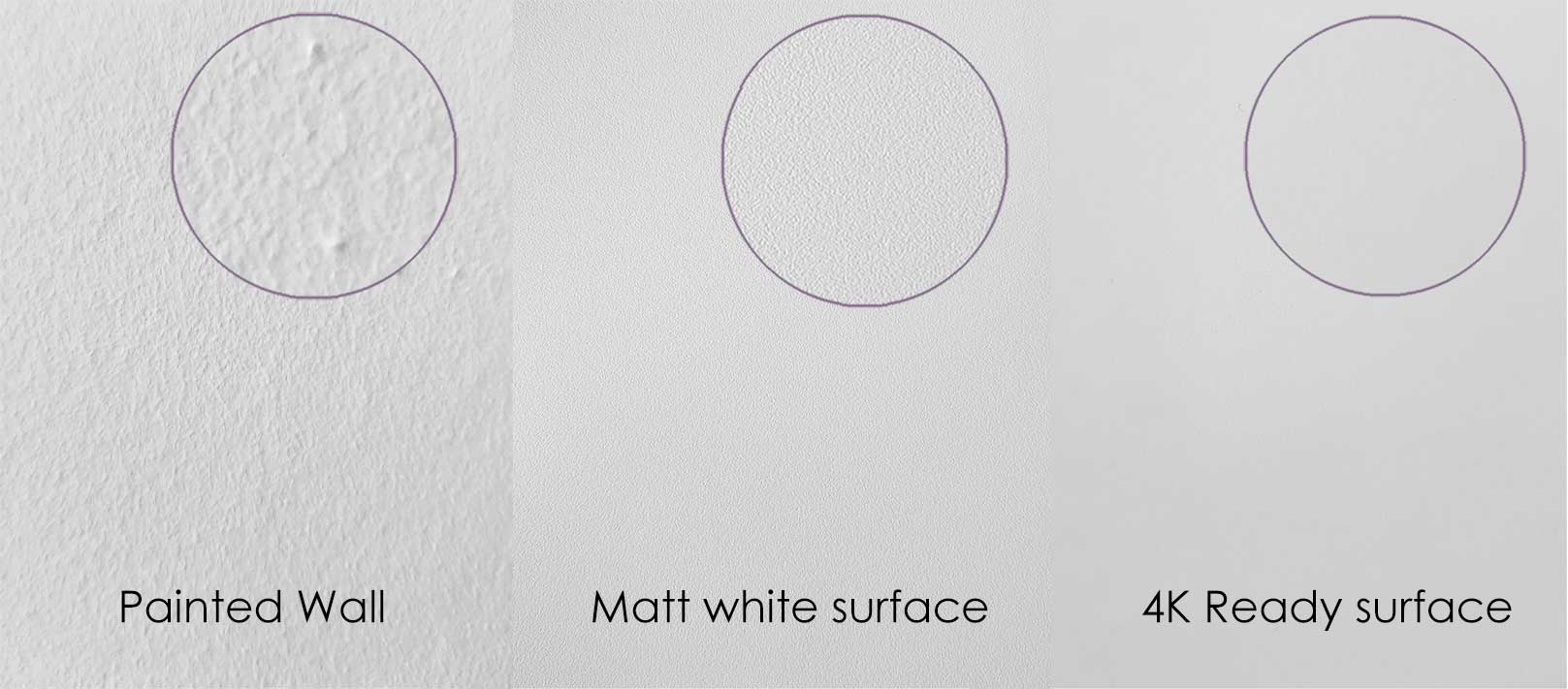
Using a projector screen ensures you get the best brightness and image definition.
Image Contrast and Colours
It goes without saying that a wall that is painted any colour other than white will affect the colours and contrast of the image. A magnolia wall for example may affect the skin tones etc.
But even a white painted wall will not offer the best contrast as the image will be affected by ambient light.
Projector screens are available with a variety of surfaces, white or grey, designed to provide the best colours and contrast depending on the surroundings and projector specifications. While the differences between screen surfaces for various applications are a subject for a future article, even a standard matt white screen will be a major improvement on a painted wall in terms of contrast and colours.

Borders
A projector screen feature that is unlikely to be replicated on walls, yet is very important, is the black borders. It may seem a small detail but it has quite dramatic effects on the image.
Aside from creating crisp, well defined edges around the viewing area, black borders help the eye focus on what is important: the image.
Framing the image has the effect of drawing the viewer's attention away from distractions around the screen while also increasing the perceived brightness and contrast of the image.

While you don't have to buy a projector screen to use a projector, it is a false saving and you will not be making the most of your projector investment without one.
Even a low-cost entry-level projection screen would be a major improvement over using a wall, let alone using a screen designed for your specific environment with the correct fabric (e.g. 4K projection).
We would even suggest spending slightly less on a projector to allow for the purchase of a screen for better results.
Are you ready to complete your system with a screen? Check out our projector screen range here or call us for advice and to discuss your options.
